
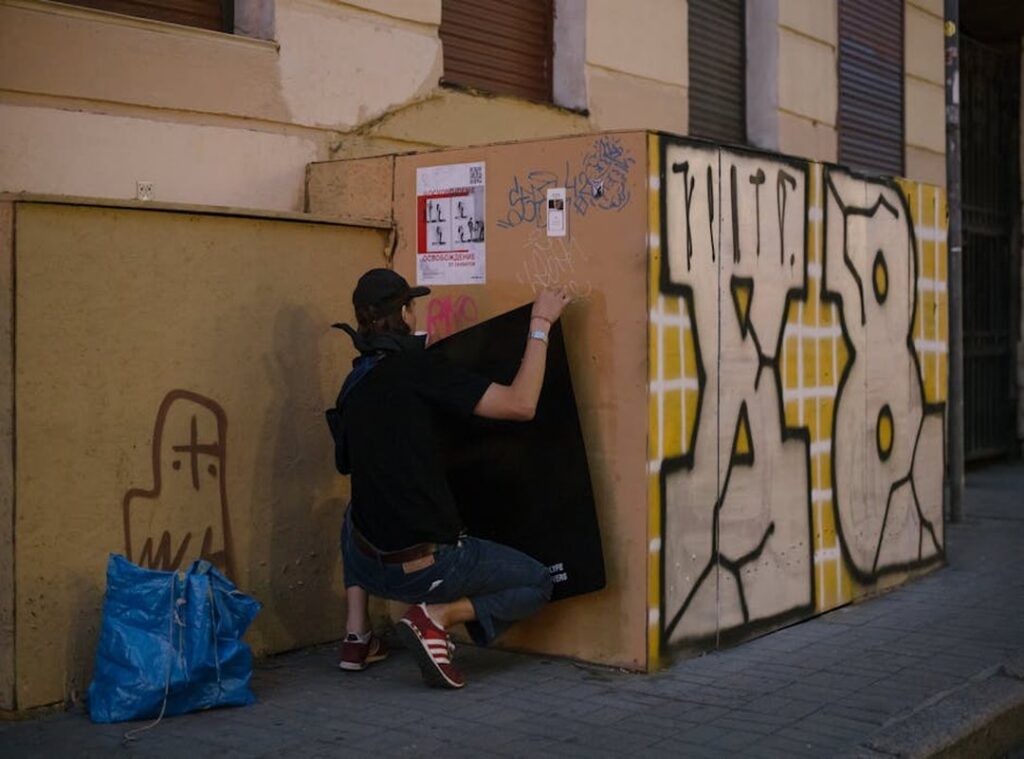
Walking past a dull city wall and suddenly seeing a vibrant mural, it’s like the whole street comes alive. You can’t help but feel drawn to it. But let’s be real, graffiti seems complex and intimidating.
Where do you even start? This guide is here to break it down for you. We’ll provide a clear, step-by-step tutorial that demystifies the basics of callejero graffitis faciles for absolute beginners.
This isn’t just any guide. It’s built on foundational techniques used by artists for decades, stripped down to the essentials. You’ll learn how to choose the right tools, master basic can control, understand letter structure, and practice safely and legally.
No more confusion, no more barriers, and let’s get started.
Choosing Your Arsenal: A Beginner’s Guide to Spray Cans and Caps
When I first started, I made the mistake of grabbing whatever spray paint was on sale at the hardware store. Big no-no. Hardware store paint, like Rust-Oleum, is great for small projects but not for serious art.
The pressure is too high, and the pigment isn’t as rich.
Artist-grade spray paint, like Montana or Molotow, is a different beast. It has better pressure control, richer pigments, and more reliable valve systems. This makes a huge difference in how your work turns out.
Trust me, it’s worth the extra cost.
For beginners, I recommend starting with low-pressure cans. They offer more control and are more forgiving when you’re learning line work. High-pressure cans can be overwhelming and lead to a lot of wasted paint and frustration.
Now, let’s talk about caps. You need a variety to get the job done right. Fat caps are perfect for filling large areas quickly.
Skinny caps are ideal for outlines and details. Specialty caps, like needle caps, give you even more precision.
Here’s a beginner’s shopping list:
– A can of black
– A can of white
– A fill color of your choice
– A pack of assorted caps
– A high-quality respirator mask
– Gloves
Safety gear is non-negotiable. A good respirator mask protects you from fumes and particulates. Gloves keep your hands clean and prevent accidental smudges.
Pro tip: Always shake the can for at least two minutes before use. This ensures the paint is well mixed and gives you a smoother, more consistent spray. After you’re done, clear the cap by spraying it upside down.
This keeps the nozzle from clogging and extends the life of your caps.
I learned these lessons the hard way. I used to think callejero graffitis faciles were all about the design. Turns out, the right tools and a bit of preparation make all the difference.
Mastering the Can: Essential Spray Paint Control Techniques
Can control is your first fundamental skill. It’s all about how you hold and move the can.
Distance from the wall affects line thickness and opacity. Closer means sharper and thinner lines, and farther means softer and wider lines.
Let’s start with basic lines. Find a practice surface like cardboard or a legal wall. Draw straight lines, curved lines, and circles.
This builds your foundation.
Now, let’s talk about fading. Fading or creating gradients is key for fills. Vary the distance and spray angle to get that smooth transition.
A classic technique is the ‘flare’ tag. It involves a quick, sweeping motion to create a line that tapers at the ends. Practice this on your surface.
Create a can control board. Fill it with different lines, dots, and shapes. This helps build muscle memory.
Stress the importance of smooth, consistent arm movements. Moving just your wrist is a common beginner mistake. Use your whole arm for better control.
Try callejero graffitis faciles to get a feel for different styles and techniques. It’s all about practice and getting comfortable with the can.
Developing Your Style: From Simple Tags to Complex Lettering
Let’s start with the basics. The tag is the foundation of all graffiti. It’s a stylized signature and the starting point for more complex pieces.
For beginners, it’s crucial to start simple. Use your own handwriting to create legible letters. Don’t rush into adding fancy style elements just yet.
Next, let’s talk about ‘throw-ups’ or ‘throwies’. These are simple, bubble-style letters that can be painted quickly. They usually have an outline and a one-color fill.
Now, let’s break down the process of creating a basic letter structure. Take a simple word and build block or bubble letters around a basic ‘skeleton’ of the letter. This helps you understand the form and flow.
Letter weight, balance, and flow are key. Letters should interact with each other to create a cohesive piece. Think of them as a team, working together to make a statement.
Practice makes perfect. Before you touch a wall, develop your tag and letter style in a sketchbook, also known as a ‘blackbook’. This is where you can experiment and refine your technique.
Callejero graffitis faciles often start with these simple steps. By mastering the basics, you set yourself up for success when you move on to more complex designs.
Remember, the goal is to build a solid foundation. Once you have that, you can start adding your unique flair. And hey, if you’re looking for some tips on avoiding common mistakes, check out top mistakes buying gifts last minute.
It’s all about being prepared and thoughtful, whether you’re gifting or creating art.
The Unwritten Rules: Practicing Graffiti Legally and Respectfully
Let’s get one thing straight. Engaging in illegal graffiti can land you in serious legal trouble. Vandalism is a crime, and the consequences can be harsh.
Don’t do it.
Now, if you’re passionate about street art, there are better ways to express yourself. One of those ways is through legal walls or permission walls. These are designated areas where you can paint without breaking the law.
Finding these spots isn’t always easy. Start by checking online forums and local art groups. Sometimes, city websites or community boards will have information too.
It’s a bit of a hunt, but it’s worth it.
Practicing on disposable surfaces is also a smart move. Large cardboard boxes, plywood sheets, or canvas are great for honing your skills. You can perfect your technique without worrying about legal issues.
Street art etiquette is a big deal. Never paint over another artist’s work unless your piece is significantly better. Even then, be respectful.
Avoid sensitive locations like places of worship, memorials, and private homes.
Becoming a respected artist is about skill and respect for the craft and community. It’s not just about getting your name up. Callejero graffitis faciles might sound cool, but it’s the dedication and respect that truly count.
Remember, the rules aren’t always clear, and what’s acceptable can vary from place to place. When in doubt, ask around and stay informed.
Your Journey as a Street Artist Starts Now
You’ve learned the core steps: getting the right gear, mastering can control, developing letterforms, and practicing responsibly. The key to improvement is consistent practice, starting with a sketchbook and moving to legal practice surfaces.
callejero graffitis faciles.
Don’t let initial hesitation hold you back. You now have the foundational knowledge to begin your artistic journey with confidence.
Challenge yourself to grab a sketchbook and design your first tag or find a piece of cardboard and practice your first lines today.
Transforming blank spaces into art is a powerful form of self-expression.
 Brian Mossoratti has opinions about shopping tips and guides. Informed ones, backed by real experience — but opinions nonetheless, and they doesn't try to disguise them as neutral observation. They thinks a lot of what gets written about Shopping Tips and Guides, Gift Ideas and Suggestions, Seasonal and Holiday Gifts is either too cautious to be useful or too confident to be credible, and they's work tends to sit deliberately in the space between those two failure modes.
Reading Brian's pieces, you get the sense of someone who has thought about this stuff seriously and arrived at actual conclusions — not just collected a range of perspectives and declined to pick one. That can be uncomfortable when they lands on something you disagree with. It's also why the writing is worth engaging with. Brian isn't interested in telling people what they want to hear. They is interested in telling them what they actually thinks, with enough reasoning behind it that you can push back if you want to. That kind of intellectual honesty is rarer than it should be.
What Brian is best at is the moment when a familiar topic reveals something unexpected — when the conventional wisdom turns out to be slightly off, or when a small shift in framing changes everything. They finds those moments consistently, which is why they's work tends to generate real discussion rather than just passive agreement.
Brian Mossoratti has opinions about shopping tips and guides. Informed ones, backed by real experience — but opinions nonetheless, and they doesn't try to disguise them as neutral observation. They thinks a lot of what gets written about Shopping Tips and Guides, Gift Ideas and Suggestions, Seasonal and Holiday Gifts is either too cautious to be useful or too confident to be credible, and they's work tends to sit deliberately in the space between those two failure modes.
Reading Brian's pieces, you get the sense of someone who has thought about this stuff seriously and arrived at actual conclusions — not just collected a range of perspectives and declined to pick one. That can be uncomfortable when they lands on something you disagree with. It's also why the writing is worth engaging with. Brian isn't interested in telling people what they want to hear. They is interested in telling them what they actually thinks, with enough reasoning behind it that you can push back if you want to. That kind of intellectual honesty is rarer than it should be.
What Brian is best at is the moment when a familiar topic reveals something unexpected — when the conventional wisdom turns out to be slightly off, or when a small shift in framing changes everything. They finds those moments consistently, which is why they's work tends to generate real discussion rather than just passive agreement.