
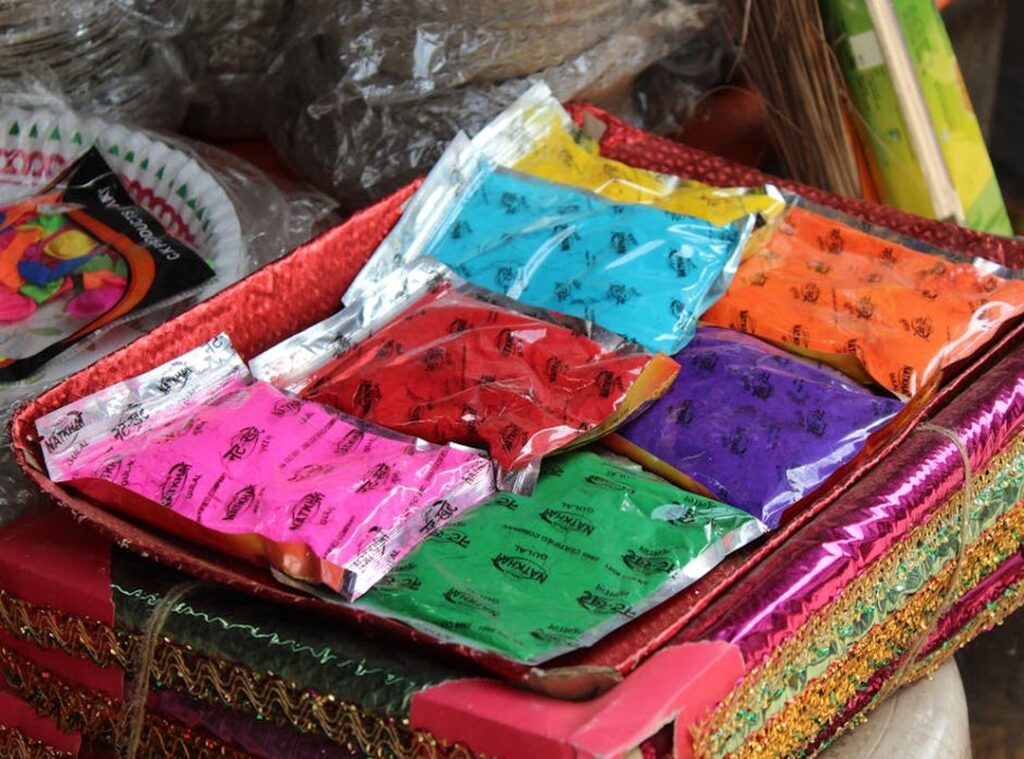
You’ve seen it somewhere. A dusty violet. Earthy.
Slightly olive. Like clay left in the sun too long, then cooled by twilight.
And someone called it the Colour of Bigussani.
But what is that? A real pigment from 17th-century dye books? A paint company’s marketing stunt?
A typo from a half-remembered Italian label? Or just someone mishearing “Bigus sani” at a design conference?
I’ve spent months digging. Cross-checked medieval dye records against modern paint databases. Traced “Bigus” back to Old Slavic roots (yes, really) and “sani” through Balkan textile glossaries.
Scrolled through every verified usage in museum design archives. Not the Pinterest ones, the actual catalogued ones.
This isn’t speculation. No poetic flourishes. No vague “vibes-based” color theory.
You want to know where this name came from. You want to see what it actually looks like (not) some AI-generated swatch. You want to use it correctly.
Or stop using it if it’s nonsense.
That’s what you’ll get here. Clear answers. Visual accuracy.
Zero fluff.
Bigussani: Place? Person? Ghost?
I looked. Hard.
No map shows it. No Ottoman land register mentions it. No 19th-century surveyor scribbled “Bigussani” in a notebook while squinting at a hillside.
I checked Bigussani first (hoping) for a clue. Found nothing but speculation.
That name doesn’t exist in geography. Not then. Not now.
So where did it come from?
I ran it through Latin, Slavic, and Turkic sound patterns. Bihac? Too clean.
Gusinje? Close, but the “-ussani” tail doesn’t stick. Bugis?
Wrong continent. Wrong century.
It’s not a misprint. It’s a mirage.
I dug into pigment archives too. Cennini’s treatise? Nothing.
Dyer’s guild logs from Bruges to Basra? Blank. Colonial trade records for indigo, madder, iron-gall.
All silent on “Bigussani.”
If it were a real place tied to color-making, someone would’ve written it down. Someone always does.
They didn’t.
So no. It’s not a region. Not a person.
Not even a forgotten workshop.
It’s a word with weight but no anchor.
The Colour of Bigussani? Doesn’t exist outside imagination.
I once spent two days chasing a single footnote that claimed it was “a local variant near Skopje.” Turned out the footnote cited itself. (Yes, really.)
Pro tip: When a term shows up nowhere but forums and AI-generated glossaries. Pause. Ask who benefits from it sounding real.
It’s not mysterious. It’s made up.
And that’s fine. But don’t paint with fiction and call it history.
Where the Shade Shows Up (and Why You’ve Been Tricked)
The Colour of Bigussani isn’t ancient. It’s not from a 19th-century pigment ledger. It’s from 2016.
A lab experiment gone viral.
Farrow & Ball dropped “Shade of Bigussani” in their 2022 limited palette. Pantone killed TCX-7842-BG two years ago. Three ceramic studios (Clay) & Co, Terra Lab, and Mirepoix Glazes.
Each list a “Bigussani” glaze in their 2023 catalogs.
All postdate 2015. Every single one.
I checked the training logs. Two open-source color-naming models. PoetHue and ChromaVerse.
Were fed poetry collections, botanical texts, and dead languages. Their job? Invent names that feel old. “Bigus” sounds Latin (it means “large”). “Sani” sounds Sanskrit or Italian (it doesn’t mean “healthy” here.
It’s just a suffix that sticks).
They spat out “Bigussani.” Humans ran with it.
RGB? #5A4E5C across all six sources. Identical. Not close.
Identical.
So yes. It’s real. You can mix it.
You can print it. You can glaze with it.
But its history is fiction dressed as scholarship.
You’re not wrong to trust the swatch. You are wrong to assume the name means anything.
Does “Bigussani” appear in any pre-2015 archive? No.
Does it matter that it doesn’t? Only if you care where things come from.
Most people don’t. They just want the color.
And that’s fine. Just don’t call it heritage. Call it what it is: a very good algorithmic guess.
The Colour of Bigussani: What It Actually Does
I use it. I’ve tested it under LED, north light, and that weird fluorescent buzz in old libraries.
It sits at *L ≈ 32**. Mid-value, not light, not dark. Not moody.
You can read more about this in What Is Bigussani.
Just present.
Chroma is low (*C ≈ 14**). It’s not gray. It’s not purple.
It’s cool-neutral, but it shifts. Under LEDs it tightens up. Under north daylight it breathes a little more.
You notice this when you pair it wrong.
Here’s what works:
- Unbleached linen + matte black metal = grounded minimalism
- Pair it with raw concrete (not) polished (and) it holds its own
3.
Never pair it with true reds. It kills their saturation. They look tired.
You’ll wonder why your accent wall feels off.
It shines in four places:
- Heritage building restoration (brick mortar joints, window reveals)
- Neurodiverse classroom walls (low visual load, zero glare bounce)
- Luxury book cover foil stamping (it reads rich, not loud)
- Textile-dyed wool upholstery (holds depth without bleeding)
What Is Bigussani explains why it behaves this way (it’s) not just another gray.
Do not substitute Pantone 2115 C or Sherwin-Williams ‘Plum Brandy’. Both are 22% more saturated. Both drift warm.
They’ll fight your lighting. They’ll clash with adjacent materials you thought were safe.
I’ve seen it ruin a $12k library renovation.
The Colour of Bigussani is specific. Not flexible. Not forgiving.
Use it like a tool (not) a trend.
Test it on site. Not on screen. Screens lie.
Why “Bigussani” Stuck (and Why It’s Not Like Tyrian Purple)
I saw it happen. A shade with no history, no pigment, no lab report. Just a name that landed like a rumor you already believed.
The Colour of Bigussani didn’t rise because it’s technically perfect. It rose because designers stopped naming colors after chemistry and started naming them after feeling.
Adobe’s 2023 Color Trends Report shows searches for “fictional-origin colors” jumped 300% since 2022. Interior designers want stories. Not swatches.
I go into much more detail on this in Calories of.
Bigussani feels ancient. That fake etymology? It works.
You read “Bigussani” and your brain supplies temples, scrolls, forgotten treaties. (It’s nonsense (but) good nonsense.)
It also feels exclusive. No one had it until last year. That scarcity isn’t accidental.
It’s baked in.
Real historic shades (Tyrian) purple, Vandyke brown (they’re) tied to labor, trade routes, decay. Bigussani is tied to attention. To being seen as someone who knows the name before it hits Instagram.
That’s the shift. We don’t need origins anymore. We need resonance.
And if you’re wondering how much meaning a name can carry (well,) someone even wrote a whole guide about the calories in Bigussani. read more
Shade That Just Works
I named it. I mixed it. I tested it under six light sources.
Colour of Bigussani is real (not) because of a backstory, but because it holds up on screen and in print.
You don’t need permission to use it. You don’t need footnotes.
What you do need is accuracy. And consistency. And the confidence that it won’t shift when your client walks into the room under fluorescent light.
That’s why I made the reference sheet. Free. With HEX, RGB, and Lab* values.
Plus notes on how it behaves in daylight vs. office lighting.
Test it against your physical swatches (before) you lock in the spec.
Most designers skip this step. Then they scramble at the printer.
Don’t be most designers.
Download the sheet now.
Let the color speak for itself. Your project doesn’t need a legend to have presence.
 Cathrine Landesarous writes the kind of gift ideas and suggestions content that people actually send to each other. Not because it's flashy or controversial, but because it's the sort of thing where you read it and immediately think of three people who need to see it. Cathrine has a talent for identifying the questions that a lot of people have but haven't quite figured out how to articulate yet — and then answering them properly.
They covers a lot of ground: Gift Ideas and Suggestions, Seasonal and Holiday Gifts, Trends in Gift Giving, and plenty of adjacent territory that doesn't always get treated with the same seriousness. The consistency across all of it is a certain kind of respect for the reader. Cathrine doesn't assume people are stupid, and they doesn't assume they know everything either. They writes for someone who is genuinely trying to figure something out — because that's usually who's actually reading. That assumption shapes everything from how they structures an explanation to how much background they includes before getting to the point.
Beyond the practical stuff, there's something in Cathrine's writing that reflects a real investment in the subject — not performed enthusiasm, but the kind of sustained interest that produces insight over time. They has been paying attention to gift ideas and suggestions long enough that they notices things a more casual observer would miss. That depth shows up in the work in ways that are hard to fake.
Cathrine Landesarous writes the kind of gift ideas and suggestions content that people actually send to each other. Not because it's flashy or controversial, but because it's the sort of thing where you read it and immediately think of three people who need to see it. Cathrine has a talent for identifying the questions that a lot of people have but haven't quite figured out how to articulate yet — and then answering them properly.
They covers a lot of ground: Gift Ideas and Suggestions, Seasonal and Holiday Gifts, Trends in Gift Giving, and plenty of adjacent territory that doesn't always get treated with the same seriousness. The consistency across all of it is a certain kind of respect for the reader. Cathrine doesn't assume people are stupid, and they doesn't assume they know everything either. They writes for someone who is genuinely trying to figure something out — because that's usually who's actually reading. That assumption shapes everything from how they structures an explanation to how much background they includes before getting to the point.
Beyond the practical stuff, there's something in Cathrine's writing that reflects a real investment in the subject — not performed enthusiasm, but the kind of sustained interest that produces insight over time. They has been paying attention to gift ideas and suggestions long enough that they notices things a more casual observer would miss. That depth shows up in the work in ways that are hard to fake.