
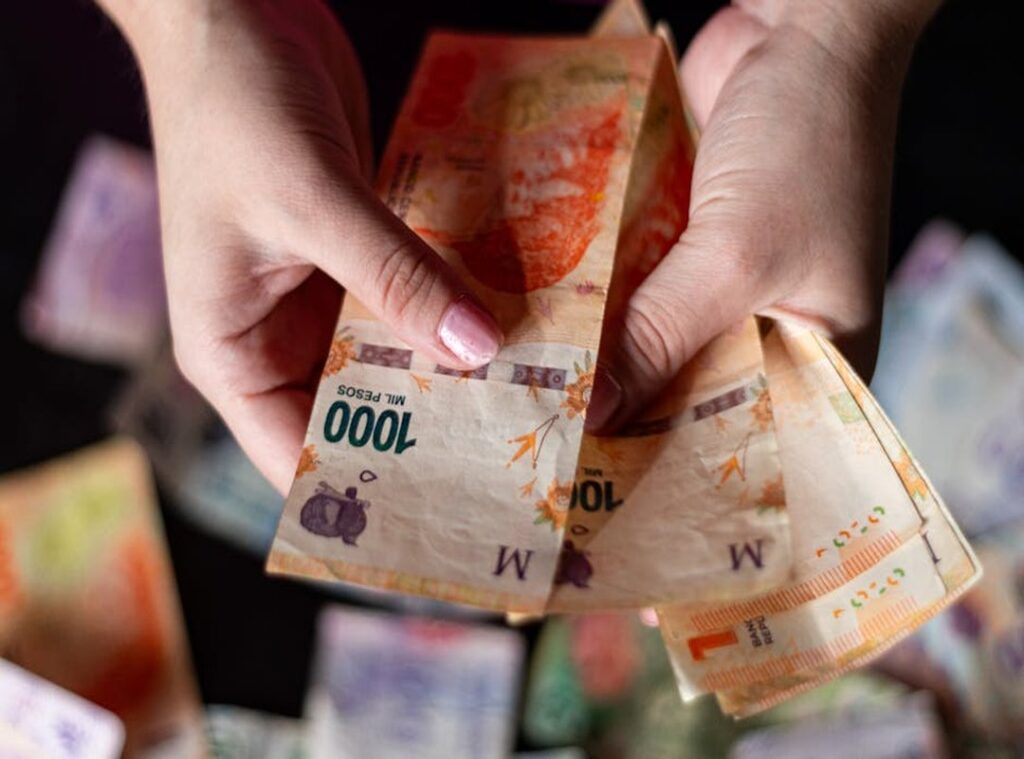
I know, converting currencies can be a headache. But it doesn’t have to be. cuantos son 1000 pesos mexicanos en chile—that’s the question on your mind, right? Let’s get straight to it.
You need to understand the current exchange rate and how to do the conversion accurately. That’s what this guide is all about. We’ll walk you through it step by step.
Trust me, I’ve got the expertise to make sure you get it right.
Understanding the Exchange Rate
The latest exchange rate between MXN and CLP can vary, so it’s always a good idea to check the most current rates.
Inflation is a big factor. When one country has higher inflation than the other, its currency tends to devalue. Economic policies also play a role.
If a government decides to print more money, for example, that can lead to devaluation.
Market trends matter too. Investor sentiment and global economic conditions can push the value of a currency up or down.
Some people argue that these factors are too complex to track. They say it’s better to just stick with what you know and not worry about the exchange rate. But here’s the thing: ignoring the exchange rate can cost you.
If you’re planning to travel or do business in Chile, knowing the rate is crucial.
Factors Affecting the Rate
Inflation, as I mentioned, is a key player. When prices go up faster in Mexico than in Chile, the MXN might weaken against the CLP.
Economic policies, like interest rates set by central banks, also influence the rate. Higher interest rates can attract foreign investment, which can strengthen a currency.
Market trends, including investor behavior and global economic shifts, add another layer. For instance, if there’s a surge in demand for Chilean exports, the CLP might strengthen.
Historical Context
Looking back, the exchange rate between MXN and CLP has seen its ups and downs. Over the years, both currencies have been affected by their respective economies and global events.
Understanding this history can help you make more informed decisions. For example, if you’re wondering cuantos son 1000 pesos mexicanos en chile, knowing the historical trends can give you a better sense of what to expect.
Some folks might say that past performance doesn’t predict future results. True, but it does provide a context. It helps you see patterns and understand how different factors have played out over time.
By keeping an eye on these factors, you can make smarter financial decisions.
Step-by-Step Conversion Process
Converting Mexican Pesos (MXN) to Chilean Pesos (CLP) is straightforward. You just need the current exchange rate and a simple formula.
First, find the current exchange rate. Let’s say it’s 1 MXN = 0.5 CLP. To convert, multiply the amount in MXN by the exchange rate.
For example, cuantos son 1000 pesos mexicanos en chile? It would be 1000 * 0.5 = 500 CLP.
Online tools can make this even easier. Websites like XE, OANDA, and TransferWise are popular. They update rates frequently and are generally accurate.
But always double-check with another source if you’re dealing with large amounts.
Banks and financial institutions offer conversion services too. They usually have competitive rates but come with fees. The process can take longer, sometimes up to a few days.
Plus, you might face additional charges for international transactions.
Compare that to online tools, and they’re quick and often free. But they might not be as secure for large transactions.
Fees and wait times vary. Banks might charge a flat fee or a percentage of the transaction. Online tools typically don’t have these upfront costs but may have hidden fees, so read the fine print.
In the end, choose based on your needs. If you need speed and convenience, go with an online tool. If security and reliability are more important, a bank might be the way to go.
Practical Tips for Currency Conversion
When it comes to getting the best exchange rate, timing is everything. (Kind of like waiting for the perfect moment to grab that last slice of pizza.)
You should also choose the right service provider. Not all banks and exchange services are created equal. Some offer better rates than others.
Avoiding Common Pitfalls: Be on the lookout for unfavorable rates and hidden fees. These can sneak up on you like a surprise pop quiz.
Always read the fine print. If something sounds too good to be true, it probably is. (Like a free lunch—there’s always a catch.)
Traveler’s Advice: When you’re abroad, using ATMs and credit cards can be a lifesaver. Just make sure your bank doesn’t charge exorbitant foreign transaction fees.
ATMs often give you a better rate than currency exchange kiosks at the airport. (And who wants to stand in line at the airport anyway?)
If you’re traveling to Chile and need to know cuantos son 1000 pesos mexicanos en chile, do some quick research online or use a reliable currency conversion app.
Lastly, if you’re looking for eco friendly gift suggestions make a difference, remember that thoughtful gifts can go a long way, even when you’re on a budget.
Real-World Examples and Case Studies
Let’s dive into some real-world examples. It helps to see how things play out in practice.
Case Study 1: Traveler Converting MXN to CLP
I remember a friend who traveled from Mexico to Chile. She had 1,000 Mexican pesos (MXN) and needed to convert them to Chilean pesos (CLP). She asked me, cuantos son 1000 pesos mexicanos en chile?
We found the best exchange rate at a local bank. The process was smooth, but she learned a few things. Always check multiple places for the best rate.
And don’t forget to ask about any hidden fees.
Case Study 2: Business Transaction Involving Conversion
In another case, a small business owner needed to buy supplies from a Chilean supplier. He had to convert a large amount of MXN to CLP.
He used an online currency converter to get a rough estimate. Then, he went to his bank to make the transaction. The bank offered a decent rate, but he also checked with a few other financial institutions.
In the end, he saved a bit by going with a different bank. It’s always smart to compare rates and consider all your options.
Pro tip: Keep an eye on the market. Rates can fluctuate, and a little patience can save you money.
Frequently Asked Questions (FAQs)

Q1: How often does the exchange rate change?
It changes pretty frequently, sometimes even multiple times a day. That’s why I always check the latest rates before making any transactions.
Q2: Are there any taxes or additional fees when converting currencies?
Yes, there are usually some fees. Banks and currency exchange services often add their own charges. It’s smart to shop around and find the best deal.
Q3: Can I convert MXN to CLP at an airport? Is it advisable?
You can, but it’s not the best idea. Airport exchange rates are often terrible. If you’re in a pinch, sure, but if you can, do it before you travel.
Pro tip: Always check the current rate for something like cuantos son 1000 pesos mexicanos en chile online first. You’ll save a lot of money that way.
Navigating Currency Conversion with Ease
cuantos son 1000 pesos mexicanos en chile is a common query for those looking to convert Mexican Pesos (MXN) to Chilean Pesos (CLP). Understanding the current exchange rate is crucial. Use reliable online tools or consult with a financial advisor.
Keep in mind that rates can fluctuate, so it’s wise to check regularly. Stay informed and use the resources provided to make the best financial decisions.
 Brian Mossoratti has opinions about shopping tips and guides. Informed ones, backed by real experience — but opinions nonetheless, and they doesn't try to disguise them as neutral observation. They thinks a lot of what gets written about Shopping Tips and Guides, Gift Ideas and Suggestions, Seasonal and Holiday Gifts is either too cautious to be useful or too confident to be credible, and they's work tends to sit deliberately in the space between those two failure modes.
Reading Brian's pieces, you get the sense of someone who has thought about this stuff seriously and arrived at actual conclusions — not just collected a range of perspectives and declined to pick one. That can be uncomfortable when they lands on something you disagree with. It's also why the writing is worth engaging with. Brian isn't interested in telling people what they want to hear. They is interested in telling them what they actually thinks, with enough reasoning behind it that you can push back if you want to. That kind of intellectual honesty is rarer than it should be.
What Brian is best at is the moment when a familiar topic reveals something unexpected — when the conventional wisdom turns out to be slightly off, or when a small shift in framing changes everything. They finds those moments consistently, which is why they's work tends to generate real discussion rather than just passive agreement.
Brian Mossoratti has opinions about shopping tips and guides. Informed ones, backed by real experience — but opinions nonetheless, and they doesn't try to disguise them as neutral observation. They thinks a lot of what gets written about Shopping Tips and Guides, Gift Ideas and Suggestions, Seasonal and Holiday Gifts is either too cautious to be useful or too confident to be credible, and they's work tends to sit deliberately in the space between those two failure modes.
Reading Brian's pieces, you get the sense of someone who has thought about this stuff seriously and arrived at actual conclusions — not just collected a range of perspectives and declined to pick one. That can be uncomfortable when they lands on something you disagree with. It's also why the writing is worth engaging with. Brian isn't interested in telling people what they want to hear. They is interested in telling them what they actually thinks, with enough reasoning behind it that you can push back if you want to. That kind of intellectual honesty is rarer than it should be.
What Brian is best at is the moment when a familiar topic reveals something unexpected — when the conventional wisdom turns out to be slightly off, or when a small shift in framing changes everything. They finds those moments consistently, which is why they's work tends to generate real discussion rather than just passive agreement.